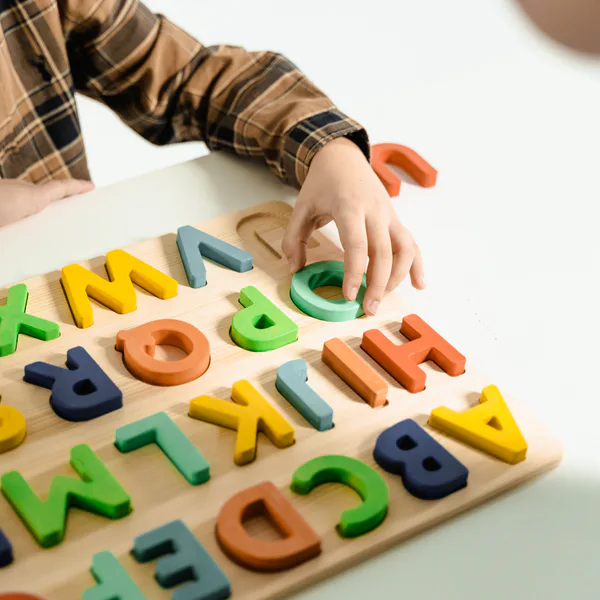
School Readiness Is More Than ABCs and 123s
A child can recite the alphabet without understanding how sounds connect to letters. A child can count to one hundred without knowing how many objects are in a small group. Memorized sequences may look impressive, but school readiness requires children to use information, follow ideas, manage attention, communicate, and solve unfamiliar problems.
Kognara founder Ann Alexander describes seeing this difference during a long career teaching science in New York City public schools. Some students arrived with rehearsed facts but struggled to apply what they knew. Others entered with broad knowledge, curiosity, and stronger thinking skills. That classroom experience shaped Kognara’s focus on cognitive foundations rather than memorization alone.
School readiness is a group of connected abilities. Letters and numbers matter, but so do language, memory, self-regulation, spatial reasoning, problem-solving, social understanding, and the confidence to try another strategy.
Understanding instead of recitation
Recitation shows that a child has learned a sequence. Understanding appears when the child can use the idea in a new setting.
A child who understands counting touches each object once, knows that the final number represents the total, and notices that adding one changes the amount. A child developing alphabet knowledge begins to connect a letter with its sound and recognize that printed words carry meaning.
Adults can move beyond recitation with simple questions:
“Can you give me three blocks?”
“Which group has more?”
“What sound do you hear at the start of sun?”
“Can you find that letter on the sign?”
The goal is not to catch an error. It is to connect a memorized label with a useful concept.
Language for learning
Children need language to understand instructions, ask questions, explain thinking, and participate in stories. Conversation builds these abilities when adults respond to the child’s ideas and add useful words.
Read together, but do more than finish the text. Ask what is happening, what may happen next, and why a character made a choice. Invite the child to retell the main events. Discuss unfamiliar words in context.
Rhyming, clapping syllables, and playing with beginning sounds support phonological awareness, the ability to notice the sound structure of spoken language. This is different from memorizing letter names, though the skills later work together in reading.
Early math with meaning
A major study that combined six longitudinal data sets found that school-entry math, reading, and attention skills predicted later academic achievement, with early math showing the strongest association in the analysis. This does not mean preschool should become formal test preparation. It means number relationships deserve a place in daily play.
Count real objects. Compare more and fewer. Build repeating patterns. Divide a small set fairly. Order objects by size. Ask what changes when one item is added or removed. Use words such as equal, between, longer, smaller, and beside.
These experiences give number and spatial words a concrete meaning.
Working memory
Working memory helps a child hold information while acting on it. It is used when following a two-step direction, remembering what disappeared from a tray, keeping track of a story, or applying a game rule.
Build this skill gradually. Start with one direction, then two related steps. Play a memory-tray game with two or three objects. Ask the child to repeat the plan before beginning. Use pictures or routines to support longer sequences.
Support tools do not make a child dependent. They teach ways to organize information and reduce overload.
Flexible thinking
School regularly asks children to shift: move from play to cleanup, sort information by a new feature, try another method, or consider a classmate’s idea.
Practice flexibility through rule changes. Sort objects by color, then by size. Play freeze dance, then reverse the rule. Ask for another ending to a familiar story. Compare two possible solutions.
Kognara’s Rule Switcher mission for ages four to six turns sorting into a flexible-thinking game by changing the rule after the child has learned it.
Self-regulation
Children do not enter school with adult self-control. They are still learning to wait, stop, handle frustration, and return attention to a task.
Games provide practice without shame. Use short turn-taking activities, start-and-stop movement, and predictable waiting with a timer. Help the child choose a strategy such as counting, breathing, or doing another small task while waiting.
Self-regulation varies with sleep, hunger, stress, and context. A child who struggles in one moment may use the same skill successfully when rested and supported.
Problem-solving and guided play
School-ready thinkers do not need to know every answer. They need experience noticing a problem, trying an idea, checking the result, and revising.
Adults can support this process through guided play. Provide a manageable challenge, wait before helping, and offer the smallest useful clue. Ask, “What could you try?” or “What do you notice?” instead of completing the task.
Blocks, puzzles, containers, sorting materials, and pretend-play props all create natural problems. The important part is the child’s thinking, not the cost of the toy.
Social understanding
Classrooms require shared attention, cooperation, turn-taking, and awareness that other people may feel or know something different.
Talk about emotions during real situations and picture books. Ask how a character feels and what clues show it. Let children practice asking for a turn, offering help, and repairing a small conflict with adult support.
Pretend play also helps children explore roles, viewpoints, and social routines. Follow the child’s idea, then add one complication that invites planning or cooperation.
Knowledge grows through experience
General knowledge gives children material for comprehension and reasoning. Nature walks, cooking, building, caring for plants, observing weather, visiting libraries, and talking with community members all provide vocabulary and concepts.
Ask children to observe closely, compare, predict, and explain. “Which leaves have smooth edges?” “What do you think will happen to the ice?” “Why did the tall tower fall?” These questions connect experience with thought.
A practical readiness routine
Read and discuss one book.
Count or compare something in a real routine.
Invite one short task with two steps.
Allow time for open or guided play.
Use a feeling word and listen to the child’s response.
Ask one question that begins with how or why.
Kognara’s screen-free Neural Missions organize these kinds of experiences from birth through age six. The later stages include story retelling, sound games, counting on, fair sharing, planning, rule switching, listening, conditional thinking, and explaining an idea to someone else.
No child needs to master a fixed checklist before learning can continue. Development varies, and readiness grows through repeated opportunities. If a child loses skills or a caregiver has concerns about milestones, language, movement, behavior, or learning, contact a qualified health professional and ask about developmental screening.
The aim is not to produce a child who can perform the longest recital. It is to help a child enter school ready to attend, communicate, remember, reason, cooperate, and keep learning when the answer is not already known.